Trainings
Training students about the basic construction of drones and how to fly the drones. Training is completely done using the “Racing Drones”
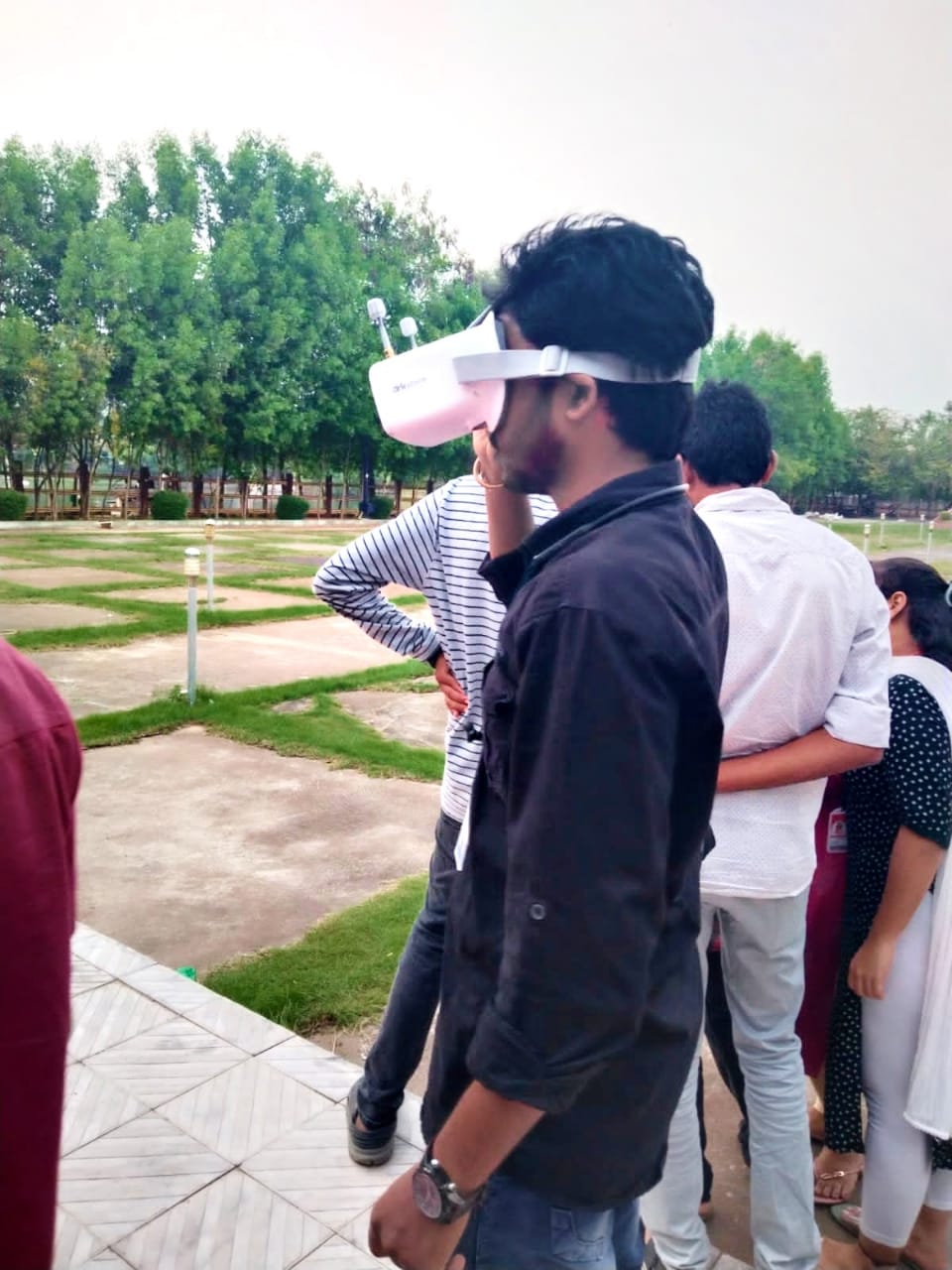
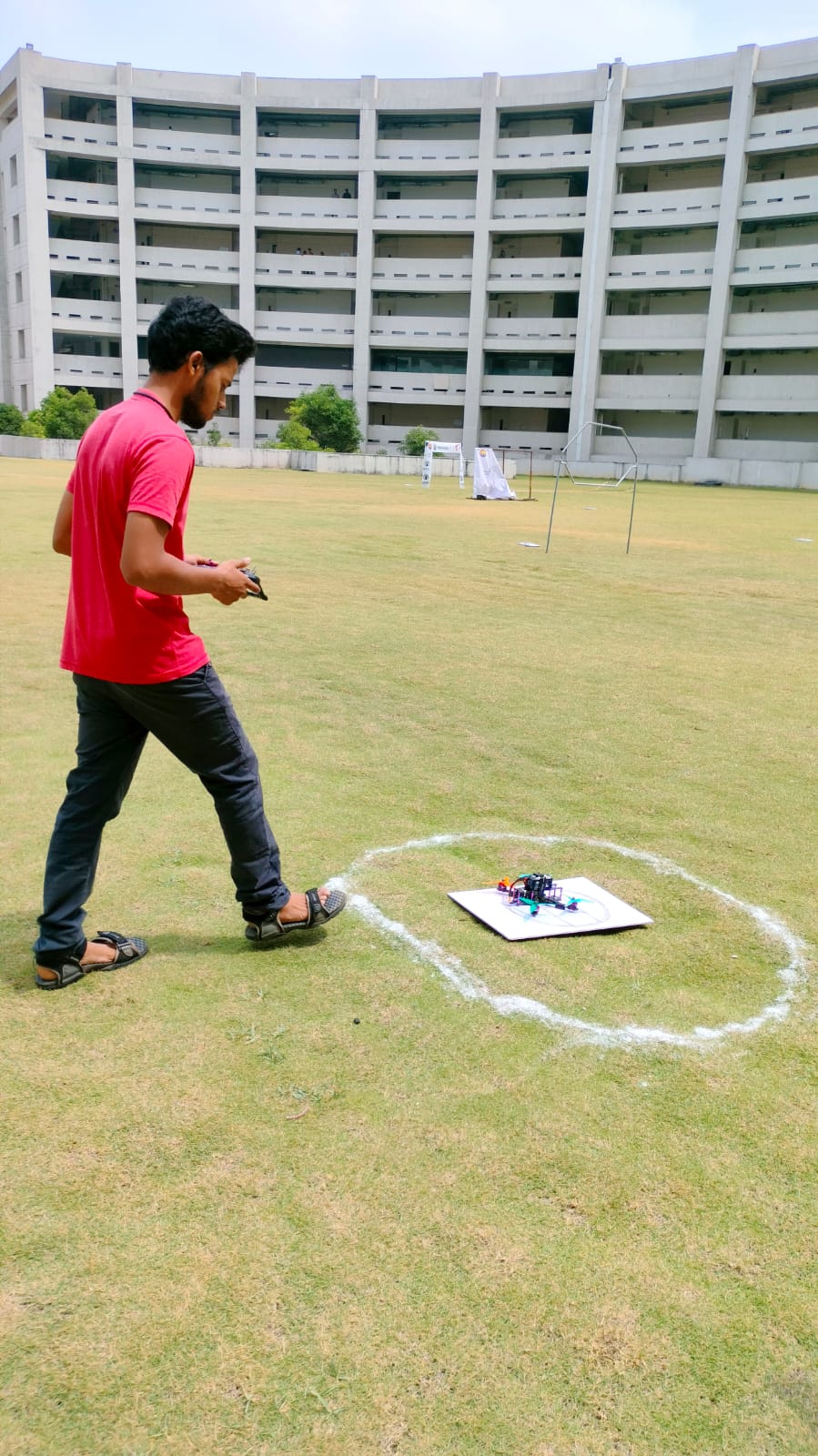
After the completion of training, the trained students are sent to various “Drone Racing Competitions” across the country.
After the completion of training, the trained students are sent to various “Drone Racing Competitions” across the country.
After the completion of training, the trained students are sent to various “Drone Racing Competitions” across the country.

Key Components
Racing Drones:
Custom-built for speed and agility, with lightweight frames and powerful motors.
Equipped with FPV cameras and transmitters for real-time video feed to the pilot.
FPV Goggles:
Provide a live video feed from the drone’s camera, giving the pilot a first-person view.
Transmitter/Controller:
Used by pilots to control the drone’s movements.
Race Courses:
Designed with various obstacles, such as gates, flags, and tunnels, to challenge pilots' skills.
Major Drone Racing Leagues and Events
Drone Racing League (DRL):
One of the most prominent professional drone racing leagues, featuring high-stakes competitions and televised events.
Races are held in unique venues, including stadiums and abandoned buildings, with elaborate courses.
MultiGP:
A grassroots drone racing league with a focus on local and regional competitions.
Offers a structured environment for pilots of all skill levels to compete.
World Drone Racing Championships:
Organized by the Federation Aeronautic International (FAI), this event brings together top pilots from around the world.
Features a global competition with rigorous courses and high visibility.
Benefits and Impact
Technological Innovation:
Drone racing drives advancements in drone technology, including improvements in speed, agility, and FPV systems.
Skill Development:
Pilots develop exceptional hand-eye coordination, reflexes, and spatial awareness.
Building and tuning racing drones also enhance technical skills.
Community and Culture:
Drone racing fosters a vibrant community of enthusiasts, from hobbyists to professional pilots.
Events and competitions create opportunities for networking, collaboration, and sharing knowledge.
Entertainment Value:
The sport provides thrilling entertainment for spectators, both live and through broadcasts.
Spectator interest has led to increased media coverage and sponsorship opportunities.
Future of Drone Racing
Increased Popularity:
As drone technology becomes more accessible, the popularity of drone racing is expected to grow.
More people will likely participate in and follow the sport.
Educational Opportunities:
Drone racing can be integrated into educational programs to teach STEM (Science, Technology, Engineering, and Mathematics) concepts.
Schools and universities may develop drone racing clubs and courses.
Technological Integration:
Future advancements may include augmented reality (AR) and virtual reality (VR) integrations to enhance the racing experience.
Autonomous drone racing, where AI controls the drones, could become a new competitive category.
Key Components
Racing Drones:
Custom-built for speed and agility, with lightweight frames and powerful motors.
Equipped with FPV cameras and transmitters for real-time video feed to the pilot.
FPV Goggles:
Provide a live video feed from the drone’s camera, giving the pilot a first-person view.
Transmitter/Controller:
Used by pilots to control the drone’s movements.
Race Courses:
Designed with various obstacles, such as gates, flags, and tunnels, to challenge pilots' skills.
Major Drone Racing Leagues and Events
Drone Racing League (DRL):
One of the most prominent professional drone racing leagues, featuring high-stakes competitions and televised events.
Races are held in unique venues, including stadiums and abandoned buildings, with elaborate courses.
MultiGP:
A grassroots drone racing league with a focus on local and regional competitions.
Offers a structured environment for pilots of all skill levels to compete.
World Drone Racing Championships:
Organized by the Federation Aeronautic International (FAI), this event brings together top pilots from around the world.
Features a global competition with rigorous courses and high visibility.
Benefits and Impact
Technological Innovation:
Drone racing drives advancements in drone technology, including improvements in speed, agility, and FPV systems.
Skill Development:
Pilots develop exceptional hand-eye coordination, reflexes, and spatial awareness.
Building and tuning racing drones also enhance technical skills.
Community and Culture:
Drone racing fosters a vibrant community of enthusiasts, from hobbyists to professional pilots.
Events and competitions create opportunities for networking, collaboration, and sharing knowledge.
Entertainment Value:
The sport provides thrilling entertainment for spectators, both live and through broadcasts.
Spectator interest has led to increased media coverage and sponsorship opportunities.
Future of Drone Racing
Increased Popularity:
As drone technology becomes more accessible, the popularity of drone racing is expected to grow.
More people will likely participate in and follow the sport.
Educational Opportunities:
Drone racing can be integrated into educational programs to teach STEM (Science, Technology, Engineering, and Mathematics) concepts.
Schools and universities may develop drone racing clubs and courses.
Technological Integration:
Future advancements may include augmented reality (AR) and virtual reality (VR) integrations to enhance the racing experience.
Autonomous drone racing, where AI controls the drones, could become a new competitive category.
GAGANYAN AEROSPACE LLP
Drone center of excellence,
Vishnu Institute of Technology, Bhimavaram
Phone: +91 77027 26262
Email: gaganyanaerospace@gmail.com
Useful Links
© Copyright Gaganyan Aerospace LLP. All Rights Reserved
© Copyright Gaganyan Aerospace LLP. All Rights Reserved